
 By
By 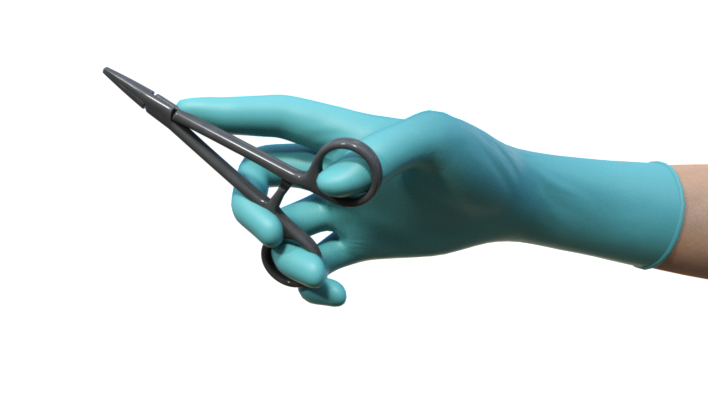
In the high-stakes environment of the operating theater, where millimeters can separate success from complication, the quality of a surgeon’s tools is as critical as the steadiness of their hands. While much of the modern medical discourse focuses on the “flashy” innovations of artificial intelligence and high-resolution imaging, the backbone of any successful procedure remains the foundational hand-held instrument. Among these, the Bonney forceps stand as a testament to the marriage of ergonomic design and mechanical efficiency.
Named after the pioneering British gynecologist Victor Bonney, these instruments were designed with a specific philosophy: to provide a robust grip on dense tissues without sacrificing the tactile feedback necessary for delicate maneuvers. As surgical techniques evolve to be increasingly complex, the role of these heavy-duty forceps has not diminished. Instead, they have become a staple in a variety of disciplines, from orthopedics to general surgery, proving that a well-designed classic is often the most reliable partner in the pursuit of patient safety.
The Anatomy of Strength: Design and Functionality
To understand the enduring utility of Bonney forceps, one must first look at their unique structural profile. Unlike the more common, slender variants found in a standard minor-procedure kit, Bonney forceps are characterized by their broader jaws and substantial, luminal construction. They are purposefully larger than standard forceps, a design choice that provides surgeons with enhanced leverage when manipulating dense structures like fascia or muscle.
The jaws of the instrument are typically serrated, a feature that provides a non-slip grip on wet or slippery tissues. This “teeth-like” configuration allows for maximum control during hemostasis-the stopping of blood flow-or when securing heavy tissue planes during a laparotomy. Furthermore, many versions include a sophisticated locking mechanism. This allows the surgeon to maintain a constant, secure hold on an organ or tissue layer without the continuous physical effort of squeezing the handles. By reducing the muscular strain on the surgeon’s hand during a long procedure, the instrument helps mitigate fatigue, ensuring that the final sutures are placed with the same precision as the initial incision.
The Science of the Grip: Ergonomics and Materials
The precision of the Bonney forceps is not a happy accident; it is the result of rigorous engineering. The ergonomic shape is designed to accommodate the natural contours of the human palm, facilitating fine motor control even when the instrument itself is robust. The specific taper and length of the handles are calibrated to optimize the fulcrum point, allowing the surgeon to exert significant force with minimal strain.
Material science plays an equally vital role in the instrument’s performance. High-quality forceps are typically crafted from medical-grade 400-series stainless steel or corrosion-resistant alloys. This ensures that the jaws remain sharp and the tension remains consistent after hundreds of uses. Perhaps more importantly, these materials must withstand the brutal environment of the autoclave. Repeated exposure to high-pressure steam, high temperatures, and harsh chemical antiseptics can cause inferior metals to warp or pit. By utilizing advanced metal treatment technologies, manufacturers produce instruments that retain their “spring” and structural integrity, directly translating to more predictable surgical outcomes.
The Competitive Edge: Bonney vs. Standard Variants
In the crowded landscape of surgical instrumentation, the Bonney forceps occupy a unique niche that bridges the gap between delicate tissue handling and heavy-duty clamping. When compared to other popular variants, their versatility becomes clear.
- Vs. Artery Forceps: While artery forceps (like Kelly or Crile variants) are excellent for clamping blood vessels, they often lack the broad surface area required to manipulate large tissue flaps. The Bonney design allows for multitasking-clamping and holding simultaneously.
- Vs. Adson Forceps: Adson forceps are the “fine-point” tweezers of the surgical world, perfect for skin closure and delicate plastics. However, they are easily overwhelmed by dense fascia. The Bonney provides the robust alternative needed for deeper, more substantial structures.
- Vs. Mosquito Forceps: While a Mosquito forceps is ideal for tiny, precise hemostasis, the Bonney offers superior leverage and less compression-related trauma on thicker tissues, preventing the unintended “crushing” of vital layers during dissection.
This ability to transition between robust grasping and relatively atraumatic handling makes the Bonney an indispensable “all-rounder” in procedures like thoracotomies or orthopedic reconstructions where maintaining a clear, open field is essential.
Mastering the Tool: Techniques for the Modern Surgeon
For the surgical resident or medical student, learning to use Bonney forceps correctly is a rite of passage. Proficiency begins with selection. Using a large Bonney in a confined space like a pediatric cavity can impede movement, while using a smaller variant on a thick abdominal wall can lead to instrument slippage.
The technique of the “uniform close” is paramount. A surgeon must learn to apply pressure evenly across the serrated jaws to prevent localized tissue trauma or necrosis. Positioning is equally critical; the forceps should be angled to maximize the grip surface without creating lateral force that could tear the tissue.
Many veteran surgeons recommend “shadowing” and simulation labs to develop the necessary haptic memory. By feeling the resistance of different materials in a controlled setting, a novice can learn to “read” the feedback through the steel. This tactile dialogue between the instrument and the surgeon’s hand is the secret to minimizing unintended injuries and ensuring a smooth, complications-free procedure.
Common Pitfalls and How to Avoid Them
Despite their robust design, the misuse of Bonney forceps can lead to suboptimal patient outcomes. One of the most frequent errors among novice practitioners is the application of excessive force. Because the instrument provides so much leverage, it is easy to inadvertently crush delicate underlying structures. This can lead to post-operative bleeding or tissue death.
Communication within the surgical team is the best defense against these errors. A surgeon should always be aware of exactly what is being held in the jaws and for how long. Another common issue is improper angling, which leads to the instrument slipping. This is often caused by trying to “reach” too far rather than adjusting the surgical field or the retractors. Practice in simulation environments-observing how blood flow reacts to different levels of pressure-can help a surgeon develop the intuition needed to know when to tighten the grip and when to let the instrument do the work.
Innovation and the Future of Manual Instruments
The evolution of surgical tools has accelerated with the rise of nanotechnology and advanced metallurgy. We are seeing a new generation of Bonney forceps crafted from titanium composites. These are significantly lighter than their stainless-steel predecessors, further reducing surgeon hand fatigue while offering enhanced resilience. Precision machining now allows for “tighter tolerances,” meaning the jaws align with microscopic accuracy, providing a more secure grip than ever before.
Looking forward, the integration of “smart” technology is a distinct possibility. Imagine a pair of forceps embedded with haptic sensors that provide a visual or auditory alert if the surgeon is applying a level of pressure that risks tissue damage. While still in the experimental phase, these “intelligent” manual tools could provide an extra layer of safety, combining the reliable mechanical design of the 20th century with the data-driven precision of the 21st.
The Impact of Robotics on Traditional Tools
As robotic-assisted surgery becomes the norm in many major medical centers, some have questioned the future of hand-operated tools like the Bonney forceps. However, the reality is a story of integration rather than replacement. While robots offer unparalleled precision in stable environments, they lack the immediate tactile feedback and haptic control that a manual instrument provides.
In emergency scenarios-where a quick, decisive action is needed to control a bleed or secure an airway-the familiarity and speed of a hand-operated tool are invaluable. Furthermore, manual instruments remain the primary teaching tools for developing the “feel” of surgery. A surgeon who understands the mechanical limits of a Bonney forceps will be a more intuitive and safer operator when they eventually transition to a robotic console. The future of the operating room is likely a hybrid model, utilizing the strengths of robotic precision alongside the essential tactile control of traditional instruments.
The Enduring Legacy of the Steel Grip
In conclusion, the Bonney forceps represent a pinnacle of surgical design. By combining robust grip strength, ergonomic comfort, and mechanical advantage, they have secured their place as a vital component of the modern medical arsenal. Whether they are being used to navigate the complexities of a gynecological procedure or provide leverage in an orthopedic reconstruction, their contribution to patient safety and surgical efficiency is undeniable.
As technology continues to transform the medical landscape, the principles of precision and control remain constant. Understanding the anatomy, science, and proper application of these forceps is more than just a technical requirement; it is a commitment to the art of healing. In a world of increasing automation, the connection between the surgeon’s mind, their hand, and the tip of their instrument remains the most important link in the chain of care.











Comments